
Crafting Beyond the Clock
Local artists prove passion projects can shine just as bright as day jobs
By Sonia Duggan
Creativity doesn’t always come from full-time artists. Sometimes, it’s born in garages, home studios or weekend workshops. For Jamaison Schuler, Mark Hernandez and Matt Beal, their craft began as a personal outlet but has evolved into something more — side gigs that bring recognition, joy, business opportunities— and even healing.
Jamaison Schuler: Fusing Creativity
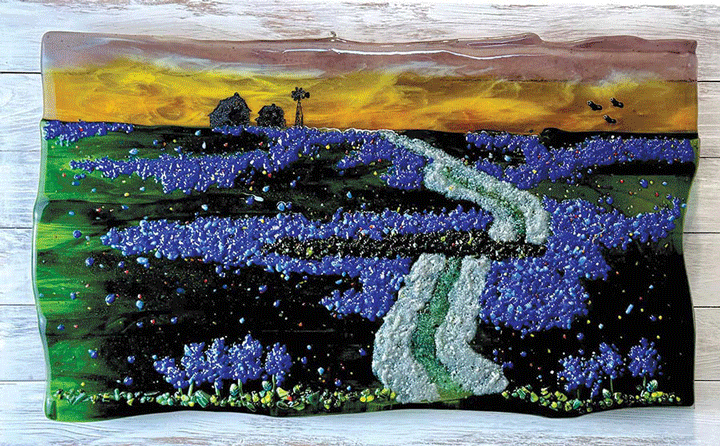
Employed in global communications for a chemical company, Jamaison Schuler spends his workdays crafting messages for a corporate audience. But on nights and weekends, those communication skills shift to a different medium — glass. As the artist and owner behind Four Leaves Glassworks, Schuler can most often be found in the third bay of his Sachse garage, a studio packed with glass in many forms, a kiln, workbench and tools. It’s where he transforms glass into art and jewelry — and shares his passion by teaching others the craft of fused glass.
“I always say this is still just my evenings and weekends gig,” he said. “The finished glass art will never pay the bills or keep a roof over my head, but it’s fun to make and people seem to like it.”
Schuler’s work has earned him a place among the State Fair of Texas Creative Arts exhibitors, where he has competed for the past four years. His collection of eight ribbons includes top honors in glass, jewelry and State Fair theme categories.
“It’s just bragging rights, I guess,” he said. “But it’s always fun to enter and go see your piece on display.”
Because he sells his work, Schuler is classified as a professional artist, which limits him to one entry per category. “In non-professional you can enter multiple pieces,” he explained. “In professional, you get just one shot.”
His path to glass began more than 25 years ago with stained glass projects in Indiana. After he and his family relocated to Texas 15 years ago, his supplies sat boxed up in storage until he sold them off.
“I enjoyed stained glass, but I had always been interested in fusing,” he said. “It’s a different craft and much more expensive. You have to have your own kiln, and you can’t even use the same glass. If you accidentally mixed them, you’d have breakage.”
As his corporate career advanced, Schuler was finally able to afford the equipment and materials to pursue fused glass, which became the creative outlet he had long wanted.
Largely self-taught, Schuler turned to online tutorials and trial-and-error to hone his skills. He began sharing projects on YouTube, and his informal approach resonated with other artists. Today, nearly 18,000 subscribers tune in to see his experiments, thrifting finds and recycling tips.
“I never purposely entered into being an influencer or anything like that,” he said with a laugh. “But suddenly I am. My shtick is I’m still learning, so just come along with me on the journey.”
His subscribers enjoy the resourcefulness he brings to an expensive hobby. One popular video featured a thrifted cheese board that Schuler refinished with a fused glass center. It sold immediately.
“There’s no such thing as scrap in my studio,” he said. “Even little shards get repurposed into jewelry or something else. If something breaks, I make something completely different.”
That inventive streak also sparked a side venture.
Searching for kiln-safe decals to add unique designs to his fused glass, Schuler came up empty. So he created his own.
He posted a photo in a Facebook group for fusing artists and the reaction was immediate. “Everybody was wondering how I did it,” he said. “So I turned it into another kind of side business.”
In 2021, he launched with four designs and sold out within 24 hours, recouping his entire investment. Today, he offers 20 designs, many modeled after cathedral rose windows, and ships orders worldwide. “It’s really wild to think I’ve got customers in a dozen different countries,” he said.
The business has grown into a reliable source of income alongside his YouTube revenue. This spring, he debuted at the Vegas Glass Expo, where he taught classes and sold his decals, and he plans to return in 2026 to do the same.
Closer to home, Schuler is a regular at the annual Wylie Arts Festival, where his booth has doubled in size to accommodate the inventory. He also hosts workshops, including one at Wylie Urban Market that drew two dozen participants.
At festivals, children often gravitate to the small glass hearts he sells for a few dollars each. He also donates glass paw prints to the Sachse Animal Shelter, where they’re given to new pet adopters. “I just like that people can take home something handmade and local,” he said.
Creativity runs in the household. While Jamaison spends hours in the garage, his wife, Dawn, runs a cottage bakery business, Sugarcoated KitchenTx, and does freelance work for the Girl Scouts. With both of their children away at the University of Texas at Austin, the couple has settled into a rhythm.
“She’s a little bit of a glass widow, because I’ll be out in the garage for hours,” Schuler said. “But she’s a reader, so she’ll park herself on the couch with a book and we both end up happy.”
Though his art may never replace his day job, Schuler dreams of retiring early from corporate life and opening a larger studio and retail space. Until then, he’s content to keep experimenting, teaching and creating.
“If somebody buys an ornament or a platter and they’re happy with it, or they gift it to someone else, it’s bringing them joy,” he said. “And that’s what makes it worth it.”
Visit fourleavesglass.com
Mark Hernandez: Breaking Stigmas Through Art
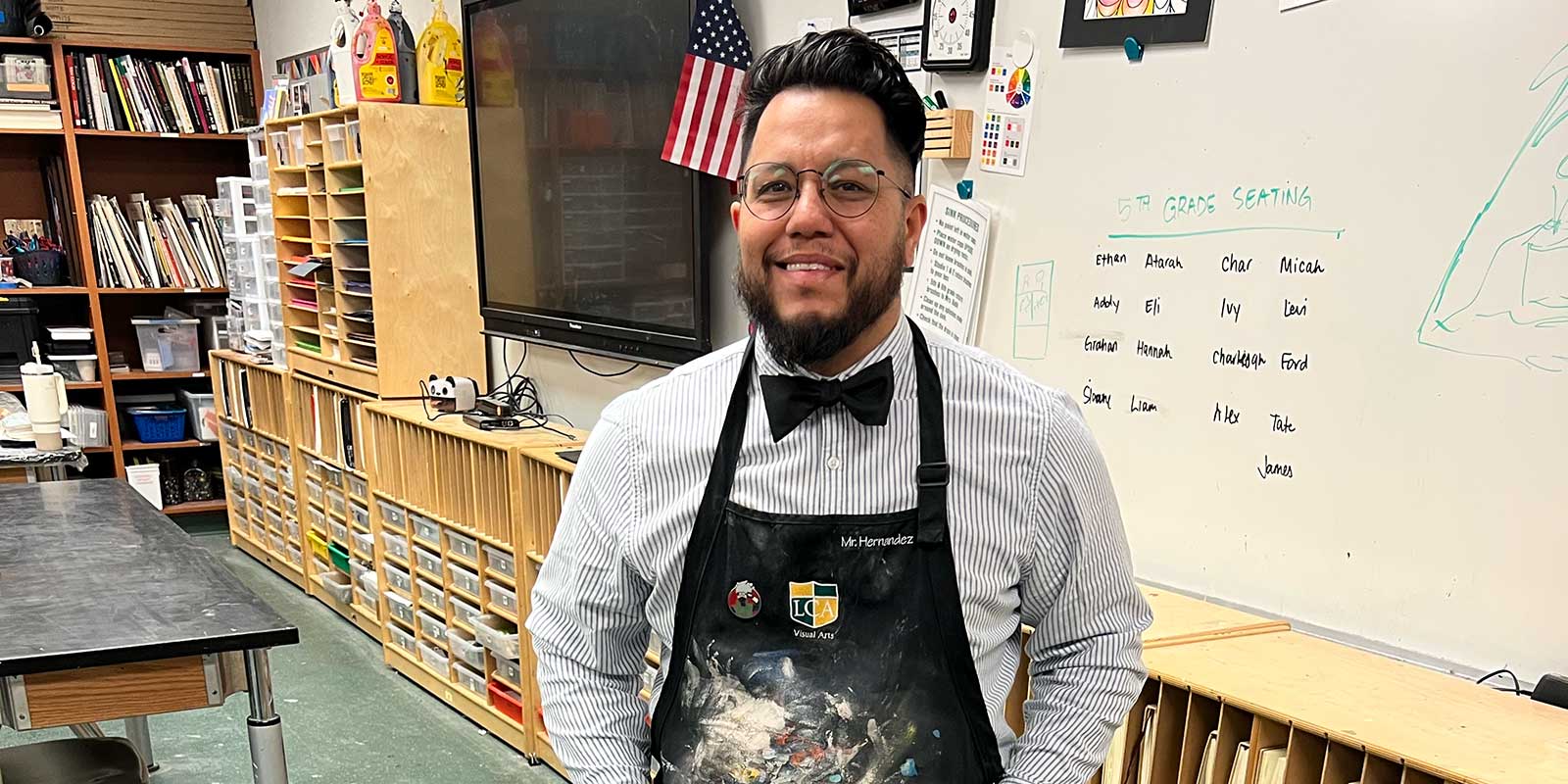
Lavon resident Mark Hernandez, 39, a middle school art teacher, recently debuted the most personal project of his career — one rooted in family, faith and mental health. His exhibit, Sentimientos del Macho, opened in September at Artes de la Rosa Cultural Center in Fort Worth, challenging traditional notions of masculinity in Latin culture while giving voice to stories of pain, resilience and hope.
“A macho man is a man who is really in tune with who they are emotionally — telling your children you love them, treating your wife with respect,” Hernandez said. “That’s the stigma I’m trying to break.”
Hernandez’s passion for mental health comes directly from his own journey. The oldest of four children born to teenage parents in the Texas Panhandle, Hernandez grew up fast. By 17, his father had become involved with the cartel and was grooming him to take part. Six months later, his father disappeared, leaving the family without support.
Encouragement from a mentoring family kept Hernandez in school, and he became the first in his family to graduate high school and earn a college degree.
At Lubbock Christian University, professors and a campus therapist introduced him to Mexican artists who used their work to process trauma and speak to their communities. That encouragement pushed him to see art as more than a personal outlet — it became a way to heal and connect.
Hernandez eventually went into education and mentorship, working at the Children’s Home of Lubbock before teaching Spanish, and later art, at Legacy Christian Academy in Frisco. Along the way, he says his story — as painful as it is — has been a way to encourage others facing their own struggles.
“I write a lot about my faith and how the Lord played a role in who I am, and how he changed my perspective,” Hernandez said. “It led me to just have this huge heart for mental health and helping people get resources they need — physically, spiritually, mentally.”
Family remains at the center of his work. Hernandez and his wife, Michelle, are raising three of their four children in Lavon. His self-portrait for the show is surrounded by doodles drawn by his kids, representing the love and involvement he strives to show them. “When my daughters grow up, I want them to say, ‘I want to marry a guy just like my dad.’ And when my son grows up, I hope he says, ‘Yo, I want to be just like you, pop,’” Hernandez said.
The Sentimientos del Macho exhibit, which took three years to develop, featured 10 men representing diverse backgrounds from Mexico, Puerto Rico, Colombia, Venezuela and beyond. Some shared struggles similar to Hernandez’s, while others grew up in stable homes. “People need to see that your story is equally as important as mine … without contrast, there’s no growth,” he told one participant.
Hernandez’s broader body of work blends ceramics, metalwork and painting into multi-medium pieces, often honoring his grandparents’ lives in the fields. Far from being stories of hardship, he frames them as joyful memories. “My family’s story … was a story of joy, of great happiness,” he said.
Though his career has taken him to exhibitions in major cities, Hernandez’s art remains anchored in his roles as husband and father. His schedule is demanding — early mornings spent painting before heading to work — but he dreams of creating opportunities closer to home.
“I want to be able to build a place where we could get some classes going or have exhibitions … so kids can see they have a talent,” he said.
Visit markhernandezfinearts.com
Matt Beal: From software to sawdust
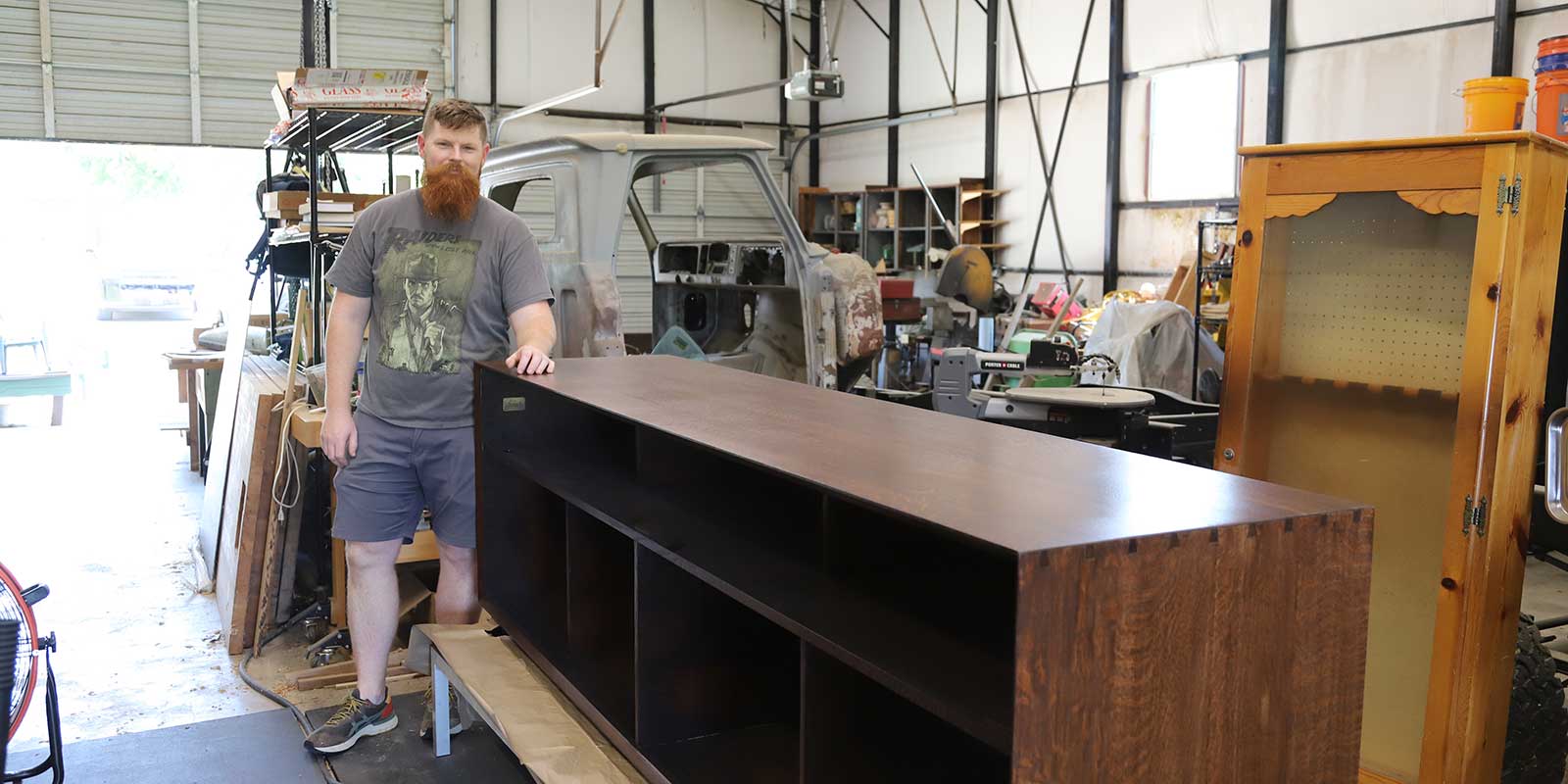
When the workday ends for Sachse resident Matt Beal, his career in software security fades into the background, replaced by the whir of saws and the smell of freshly cut wood. The 38-year-old is the craftsman behind J. Beal Fine Furniture, a business transformed from a passion project into a side gig with award-winning recognition.
The seeds of his woodworking passion were planted decades ago. As a child in the 1990s, Beal watched master carpenter Norm Abram on PBS’s This Old House and The New Yankee Workshop.
“That really was kind of the peak of craftsmanship in that time,” he said.
About 10 years ago, around the time his children were born, Beal decided to try his own hand at woodworking. His first major purchase was a band saw he found online a week after his son’s birth.
“I left my wife and newborn at home and had my dad accompany me out in the middle of nowhere to get the saw,” Beal said.
Many of the machines he’s acquired are decades old, often needing repairs. One table saw he bought was ‘just a wreck’ until he fixed it.
At first, Beal worked out of his cramped two-car garage, carefully retrofitted by mapping out every tool’s footprint with 3D renderings. When house-hunting in 2020, garage space was just as important as bedrooms.
“I actually would take the measurements of the garages of the houses we looked at and bring them home,” he said. “I knew how big all my tools were.”
When the perfect house didn’t come with the perfect garage, Beal relocated to his wife’s grandmother’s property in Lavon — a win-win arrangement that gives him the space he needs while allowing him to pitch in with chores.
Outside it’s quiet; inside, the machines roar like a concert, requiring full ear protection.
Like many woodworkers, Beal learned through trial and error, buying tools and books with money from tech side gigs and recreating Abram’s projects to test his skills.
“Almost nothing out here is set it and forget it,” he said. “It’s all straight edges and geometry.”
Beal sold his first pieces — Adirondack chairs made of cypress — in 2018. Today, his focus is high-end furniture. His most ambitious work to date, a massive white oak media credenza, has required more than 100 hours of labor since June. He sees it as a résumé piece — intentionally difficult, designed to showcase his skill.
He hopes the credenza will be accepted into the Texas Furniture Makers Show in Kerrville this October.
“The show is like an art gallery,” Beal said. “A jury reviews the entries and decides who even gets in, and then everything’s sitting on these white pedestals.”
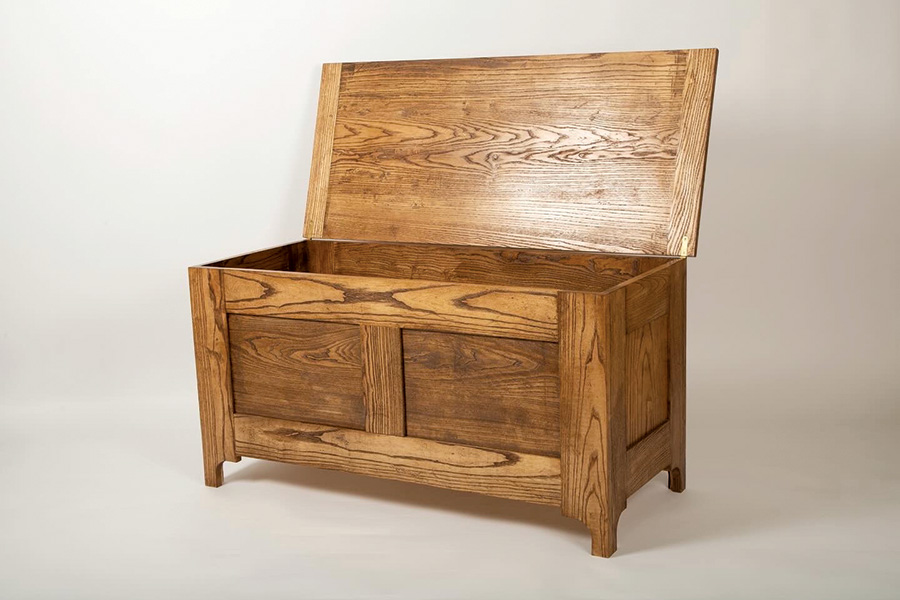
Last year, Beal built a quilt curio for his wife to display her handmade quilts. The cabinet was selected for inclusion in the Texas Furniture Makers gallery and was also awarded a Special Judges Award from Fine WoodWorking magazine.
This year, if accepted, Beal is willing to sell the credenza valued between $20,000 and $25,000. At 8 feet long and 3 feet high, Beal said, “if it doesn’t make it into the show, no big deal. I have a home for it.”
Beal and his wife Sarah, Rowlett High School graduates who first attended their eighth-grade dance together, have been married 15 years. They now have two children, ages 9 and 5, who attend Whitt Elementary.
Balancing family life, a demanding career and his furniture-making isn’t easy. “It’s a sacrifice—as a family,” Beal said. Most nights, Beal heads to the Lavon property after dinner and works until midnight — or later. Saturdays offer a rare full workday in the shop. Even so, he estimates he could only produce four large pieces per year at his current pace.
While his furniture business continues to grow, Beal hasn’t walked away from his career.
“I’m the guy that’s on the computers and on a Teams call — I lead software security for a big corporation,” he said.
Fifteen years in tech have given him stability — and burnout.
“We’ve lived kind of the corporate thing now for 15 years, and I’m ready for something different… something that improves the world in a more meaningful way. I want to be more important in the community right now.”
Visit jbealfinefurniture.com.
Though their mediums differ — glass, paint and wood — Schuler, Hernandez and Beal share a common thread: each has carved out time to create. Their work is proof that passion projects can sustain, inspire — and even transform lives — alongside full-time careers.