
Take it Outside
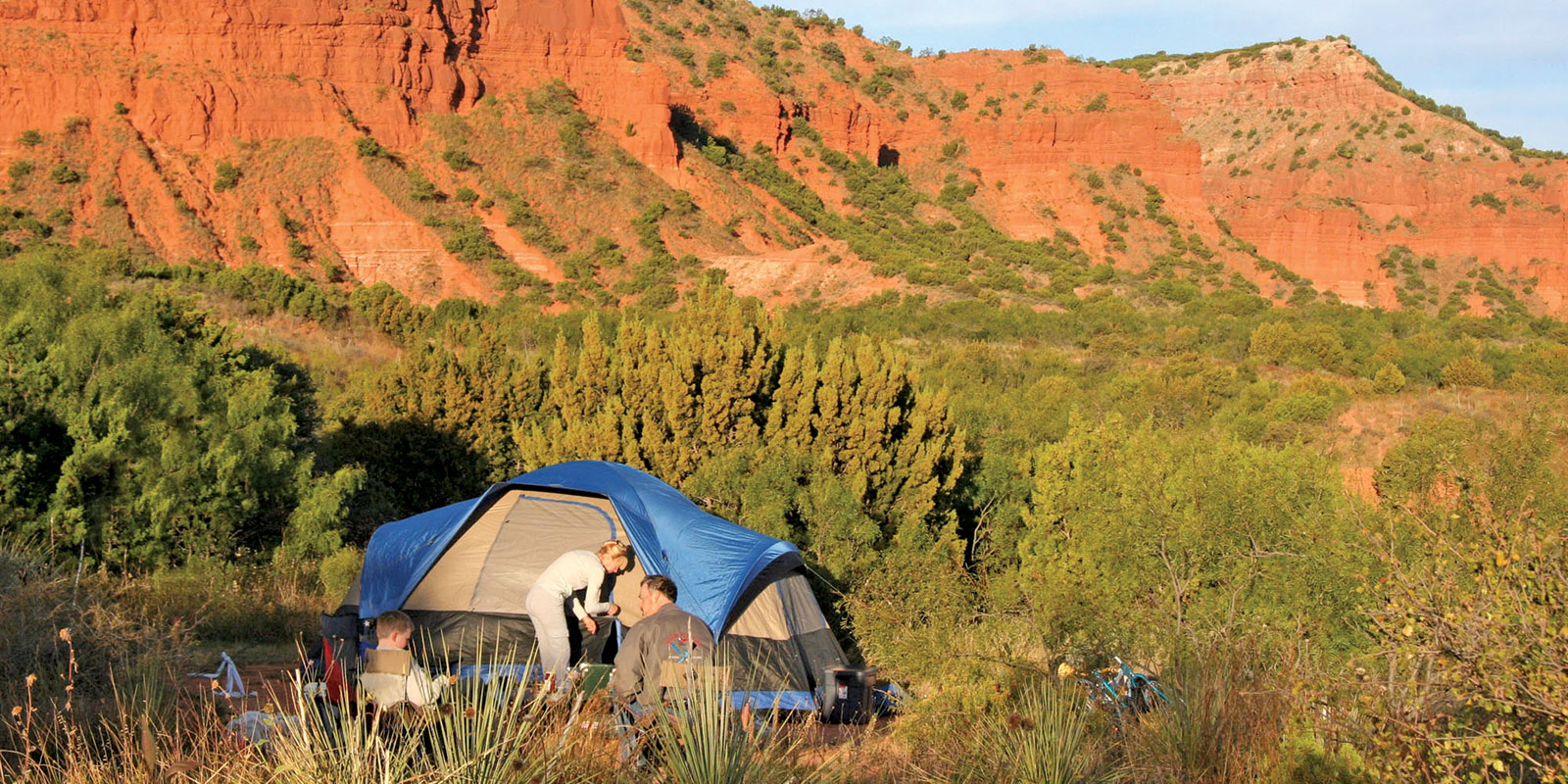
Camping escapes made for crisp nights, colorful views and autumn adventures
By Carrie Dunlea
By the time October arrives in North Texas, summer’s relentless heat has finally begun to loosen its grip. Mornings turn cooler, evenings invite an extra layer and suddenly sitting beside a campfire sounds like a very good idea.
It’s camping season.
Fall may be the sweet spot for exploring the outdoors across Texas and its neighboring states. Hiking is considerably more pleasant without triple-digit temperatures, chilly evenings make sleeping under the stars more appealing and, farther north, hardwood forests trade summer green for shades of gold, orange and crimson.
Best of all, a memorable fall escape doesn’t require a flight or a week off work. From the red-rock canyons of the Texas Panhandle to the cypress-lined waters of East Texas and colorful mountains of Oklahoma and Arkansas, some spectacular places to pitch a tent — or park an RV, rent a cabin or even go glamping — are just a road trip away.
Here are seven worth packing for.
There’s camping, and then there’s waking up at the bottom of a canyon.
Known as the “Grand Canyon of Texas,” Palo Duro Canyon drops dramatically from the flat Panhandle landscape into a world of multicolored rock walls, mesas and rugged trails. The canyon is the second largest in the country and can be explored on foot, mountain bike, horseback or by car.
October brings a major advantage: more comfortable temperatures for exploring trails that can be punishingly hot during summer.
Campers can choose from developed sites with water and electricity, drive-up tent camping or primitive backpacking. Those who like the idea of nature more than sleeping on the ground have alternatives: cabins sit along the canyon rim and floor, and furnished glamping sites come equipped with beds, air conditioning, refrigerators, grills and covered porches.
Stay outside after sunset.
Away from city lights, Palo Duro’s enormous night sky may be as memorable as the canyon itself.
About 90 miles southeast of Palo Duro, Caprock Canyons offers another dramatic Panhandle landscape — with some very large residents wandering through it.
The park is home to the Texas State Bison Herd, descendants of animals preserved by legendary ranchers Charles and Mary Ann Goodnight beginning in the late 1800s. Today, bison roam more than 10,000 acres of the park and have the right of way when they decide to cross a road.
The landscape is reason enough to visit. Red and orange canyon walls rise above prairie, cottonwoods and Lake Theo, while nearly 90 miles of park and trailway routes offer opportunities for hiking and mountain biking. Campsites range from sites with electricity to walk-in and true backcountry options.
Fall brings another splash of color as cottonwoods turn yellow against the red canyon walls.
Just remember who’s in charge here: Park officials advise visitors to stay at least 50 yards from bison.
Trade canyon walls for Spanish moss at one of Texas’ most distinctive camping destinations.
Caddo Lake feels almost otherworldly. Massive bald cypress trees rise from dark water, their branches draped in Spanish moss, while a maze of bayous and wetlands begs to be explored by canoe or kayak.
The 500-acre state park provides access to the much larger Caddo Lake ecosystem. More than 70 species of fish inhabit its waters, and paddlers can explore Saw Mill Pond and Big Cypress Bayou or venture onto longer paddling trails.
There are 46 campsites ranging from basic water sites to full RV hookups, along with screened shelters and historic Civilian Conservation Corps cabins for travelers who prefer four walls.
A word of caution before wandering too close to the water: Alligators live here, too.
For campers accustomed to North Texas lakes and prairies, Caddo offers something completely different without leaving the state.
If your vision of fall involves tall trees, a rushing river and a campfire beneath changing leaves, point the car toward southeastern Oklahoma.
Beavers Bend State Park sits along the Mountain Fork River and Broken Bow Lake amid the forested hills of the Ouachita Mountains. The combination of water, woods and winding mountain roads has made the Broken Bow area one of Oklahoma’s signature fall destinations.
Days can be spent hiking, fishing, kayaking or canoeing, followed by an evening around the fire. The Mountain Fork River is also known for year-round trout fishing. In autumn, the surrounding forest supplies the show as greens give way to gold, orange and red.
The park accommodates campers ranging from tent enthusiasts to RV travelers, while cabins provide an easy alternative for anyone who wants the outdoor experience followed by a real bed.
And with Broken Bow and Hochatown nearby, restaurants and other diversions aren’t far away if camp cooking loses its charm.
Come for the fall color. Stay for the outlaw lore.
Tucked into the Sans Bois Mountains of southeastern Oklahoma, Robbers Cave State Park combines rugged cliffs, wooded trails and lakes with stories of an era when outlaws supposedly found refuge among the area’s rocky hideaways.
A trail leads to the cave associated with notorious names including Jesse James and Belle Starr, but autumn may steal the spotlight. Oklahoma tourism identifies late October into early November as a particularly good period for viewing the surrounding hills in their fall colors.
Hiking and horseback riding offer different ways to explore the terrain, and adventurous visitors can try rappelling. Seasonal canoe and paddleboat rentals continue Thursdays through Sundays through October in 2026.
Camping options are plentiful, but those who decide they’ve had enough rustic living can retreat to a cabin or the park’s lodge.
For a classic autumn camping trip, it’s hard to improve upon Arkansas’ first state park.
Petit Jean Mountain rises above the Arkansas River Valley, creating a landscape of wooded trails, overlooks, rock formations and waterfalls. In fall, the surrounding hardwood forest supplies the color.
The signature hike leads to Cedar Falls, where water plunges 95 feet into the canyon below. Other trails lead past caves, rock shelters and overlooks, making this the kind of destination where it’s easy to fill a weekend without ever leaving the mountain.
Petit Jean also carries the fingerprints of the Civilian Conservation Corps. Rustic stone and log structures constructed in the 1930s remain part of the park experience, including historic Mather Lodge.
That makes Petit Jean especially appealing for a mixed group: Campers can sleep beneath the trees while companions who aren’t quite ready to embrace tent life can opt for a cabin or lodge room.
Pack hiking shoes. You’ll want them.
Deep in the Ozark Mountains, Devil’s Den looks almost purpose-built for October.
The park occupies a wooded valley surrounded by rock formations, bluffs and forest t with trails winding past creeks and the geological features that gave the park its name.
This is a particularly good destination for travelers who want hiking or mountain biking to be the centerpiece of the trip. Trails extend through the park and into surrounding Ozark National Forest, while the park’s CCC-built stone and wood structures lend it an old-fashioned, tucked-away feel.
There are 117 campsites along the valley floor, including sites with hookups, plus hike-in camping. For those who want a little more comfort, 17 rustic cabins and nine camper cabins are available.
When the leaves cooperate, the drive into the park may be nearly as pretty as the destination.
Fall camping has one drawback: Everyone else has discovered how good it is, too.
Popular parks can fill on autumn weekends, so advance reservations are suggested. Palo Duro and Caddo Lake, for example, both warn that they can reach capacity, while Arkansas allows campsites at Petit Jean and Devil’s Den to be reserved well in advance.
Before leaving home, check individual park websites for reservations, weather conditions, burn bans and trail closures. Temperatures can vary dramatically between North Texas and higher elevations or the Panhandle, so pack layers even when the forecast at home still looks decidedly summery.
Then bring the important stuff: hiking shoes, a comfortable chair and something warm to drink.
Summer may get all the attention when vacation season arrives, but around here, the best time to sleep under the stars might just be fall.