
When the Sirens Fade
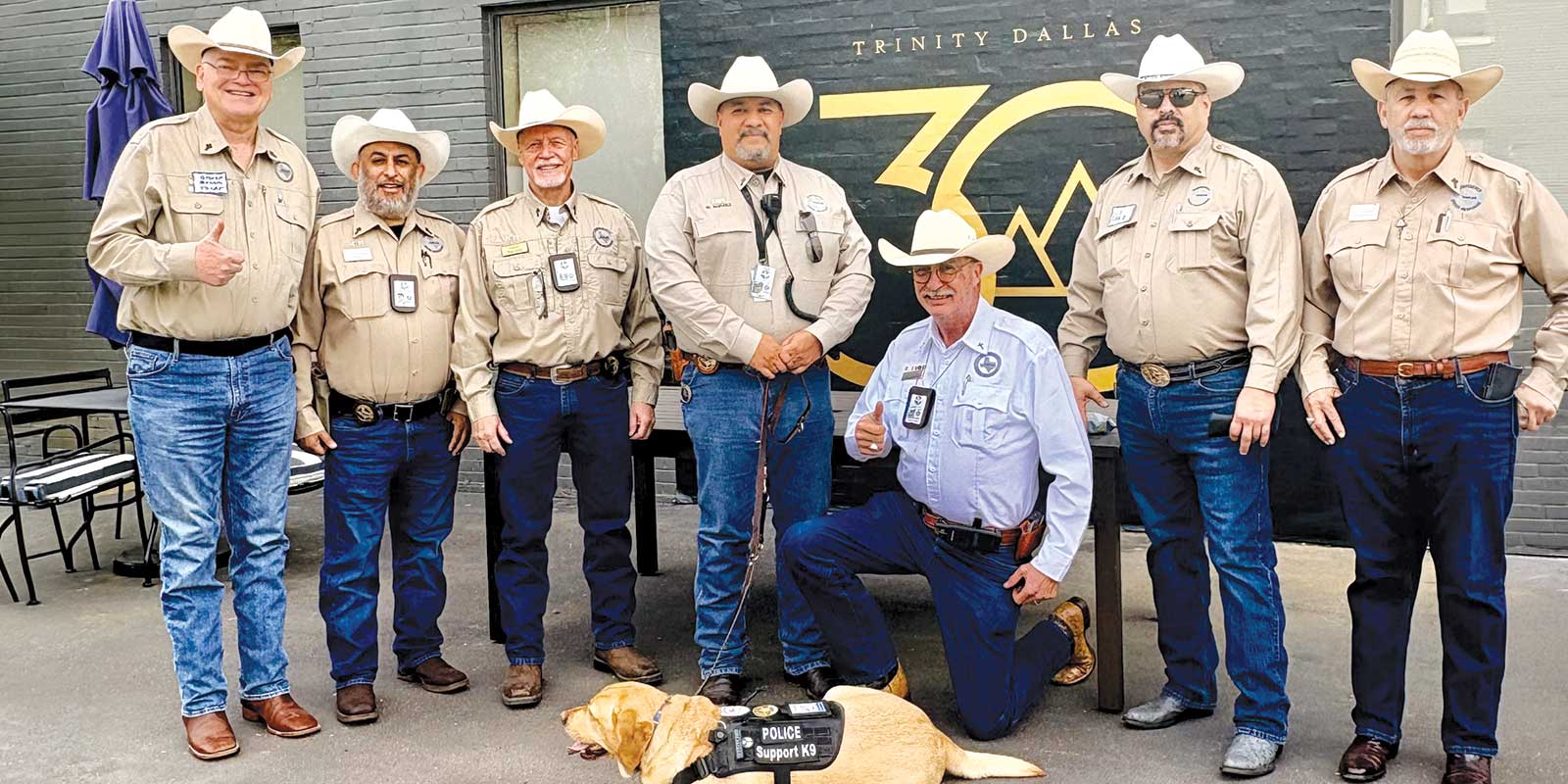
Local volunteer network supports first responders and families in crisis
By Sonia Duggan
When tragedy strikes — whether it’s a police shooting, a suicide, a mass casualty event or a devastating natural disaster — first responders rush toward the scene. But once the sirens fade and the immediate danger passes, someone is still needed to help the helpers.
For Michael Dikovitsky, a retired Dallas police officer and former federal agent who lives in Wylie, that realization became clear after he left law enforcement.
While conducting national security investigations, Dikovitsky said he encountered people in severe distress who had no trusted outlet for support, and some ultimately took their own lives. He came to believe there needed to be someone they felt safe enough to call — not to replace mental health care, which he said is vital, but to offer immediate, personal connection.
That belief shaped what would become the Texas Emergency Crisis Response Team, or TECRT, which he founded in 2010 with a broad mix of professionals because “some people simply need someone to talk to.”
Originally formed in Ellis County, the organization later became incorporated as a nonprofit and operates under WSCNetwork, a non-denominational church entity that supports chaplaincy training and ministry work.
Today, TECRT trains emergency crisis response chaplains, supports its members and deploys when called upon to assist federal and local agencies during critical incidents, while also following up with survivors through counseling and referrals.
Dikovitsky began with a group of 20 volunteers. Today, the team includes about 100 members statewide, with roughly 50 who are mobile and deploy to scenes while others assist by answering phones and coordinating support.
“We’re always looking for volunteers to help out and train,” he said.
Members include retired and active police officers, firefighters, psychologists, nurses, pastors, professional counselors and full-time hospital and VA chaplains.
“We’re all denominations, and in all the years, we’ve never had a disagreement on anything, which is marvelous,” Dikovitsky said.
For volunteers like Paul Tanis, that shared mission — and the impact it has on people in crisis — is what keeps them committed.
“I have seen how our training in trauma and crisis debriefing has helped people in their worst day,” Tanis said. “Chaplaincy is called the ‘Ministry of Presence,’ and most often people in crisis need someone to guide their stormy ship to calm waters, helping them to get through the next few minutes and hours.”
The organization is entirely volunteer run. In 2024 alone, its chaplains logged more than 30,000 volunteer hours assisting people across Texas. There is no paid administration; Dikovitsky said every dollar raised goes directly back into operations and training.
TECRT partners with the Texas Department of Public Safety and responds to calls from troopers and local agencies. Members are trained under state guidelines, operate under a formal standard operating procedure and wear identifiable uniforms. The team trains annually at the State Police Academy in Austin and occasionally conducts additional local trainings.
“We’re real strict on our training,” Dikovitsky said.
The team provides support in a wide range of crises, including officer-involved shootings, line-of-duty deaths, suicide scenes, search and rescue operations and traumatic incidents involving veterans or families of missing persons.
Often, Dikovitsky said, their work begins after law enforcement leaves a scene — when families are left to process what just happened.
“If there’s a suicide in a house, the police come and say it looks like a suicide. Once the body is picked up and the police leave, there isn’t anybody to help the families deal with what just happened,” he said. “There’s a whole list of things that we handle.”
That gap is something many outside emergency services don’t fully understand, Tanis said.
“In general, their job is a level of awareness and sustained stress that most people never experience,” he said. “We see clips on the news, but never how their work is traumatic to themselves and sometimes spills over to their family and friends.”
The team fields 24/7 calls from individuals in crisis, including those contemplating suicide. In one instance, Dikovitsky said, a woman told him he would be the last person she spoke to before taking her life.
“She was a block and a half away from me,” he said. “We were able to get her picked up and get her help.”
When needed, TECRT coordinates with the national 988 suicide hotline to ensure callers receive local resources.
For many first responders, accepting support can take time.
“It’s a hard nut to crack!” Tanis said. “Most first responders are happy to have us there to help survivors of tragedies and be of general support to their agency. Individually, support may not be accepted without first developing trust.”
He said misconceptions about chaplaincy can sometimes create hesitation.
“Many view chaplains as evangelists, seeking to convert or spout Bible verses to fix problems,” Tanis said. “This is not the goal of chaplaincy.”
Instead, he said, the focus remains on meeting people where they are.
“We provide spiritual support as requested and emotional aid and tools in every case, responding to the needs of the individual.”
Beyond individual crises, the team has deployed to major disasters, including flooding in Kerrville last year, where TECRT chaplains remained on-site for a week assisting families.
The extended deployment underscored the financial strain such responses can create.
“We’re looking to raise money to have a deployment fund so we can go anywhere at any time and have some funds to help pay for lodging and food,” Dikovitsky said.
While TECRT has responded in North Texas and supports agencies in Denton and East Texas, Dikovitsky said the group has not yet been formally utilized in Wylie. He has reached out to local churches and school officials, offering training and crisis preparation.
The organization also conducts outreach to veterans through VA partnerships and supports officers under investigation following critical incidents, when isolation and public scrutiny can take a toll.
“A lot of times they get isolated. They don’t talk to anybody,” Dikovitsky said.
In addition to crisis response for first responders and families, TECRT operates a homeless outreach ministry in North Texas. Volunteers assemble and distribute care packs that include hygiene supplies, bottled water and snacks.
“It’s an endless battle,” Dikovitsky said.
For Tanis, the work ultimately comes down to something simple — and deeply human.
“Talking through trauma can help that person to share it with another, rather than carry it alone,” he said.
In recent months, TECRT has been recognized by federal and state leaders — including members of Congress, the Texas Senate and the Department of Public Safety — for its professionalism in handling crisis situations across Texas, Dikovitsky said.
For volunteers, however, the work is less about recognition and more about readiness.
“Crisis response ministry does not work on a timetable and cannot be scheduled,” Tanis said. “You have to be available and ready to go when the call comes.”
Interested in volunteering, chaplain training or supporting TECRT’s deployment fund ?
If so, contact Michael Dikovitsky at 469-222-8740 or visit WSCNetwork.org for more information