
Exploring Early America
Historic homes, farms and estates offer a window into the nation’s earliest chapters
By Carrie Dunlea
As the United States celebrates its 250th anniversary this month, Americans are finding new ways to connect with the nation’s past. While fireworks, parades and commemorative events will mark the occasion, some of the most meaningful experiences can be found far from the crowds.
Across the eastern United States, historic homes, farms and estates dating to the colonial era and the early years of the republic still stand much as they did centuries ago. Preserved by organizations dedicated to protecting America’s heritage, these sites offer visitors an opportunity to walk through the same doorways, gardens and fields that witnessed the nation’s earliest chapters.
From a working Rhode Island farm established before the American Revolution to a Tennessee mansion built as the young republic expanded westward, these destinations provide a glimpse into daily life during America’s formative years. For travelers seeking a deeper connection to the semiquincentennial, these preserved landmarks offer a journey through the nation’s
first 250 years.
Nestled along the shores of Narragansett Bay, Casey Farm in Saunderstown, Rhode Island, offers visitors an authentic look at colonial New England. Established around 1750, the working farm has remained tied to agriculture for generations, preserving a landscape that would be familiar to residents of the colonial era.
Visitors strolling the property encounter historic farm buildings, stone walls and open fields overlooking the bay. Unlike many historic homes frozen in time, Casey Farm remains a living landscape where farming continues today. The combination of history and active stewardship helps visitors understand the agricultural foundations that sustained early American communities and shaped life throughout New England before and after independence.
Farther north in Dresden, Maine, the Bowman House stands as a reminder that even frontier settlements aspired to sophistication. Built in 1762 for Judge Jonathan Bowman, the elegant Georgian-style residence overlooks the Kennebec River and reflects the prosperity of a family living on the edge of colonial expansion.
The home’s architecture and furnishings reveal the influence of European tastes that found their way into even the most remote corners of British America. Yet the property also tells a broader story of life in the eighteenth century, illustrating the realities of settlement, trade and labor in a region that was still developing as revolutionary sentiment began to spread throughout the colonies.
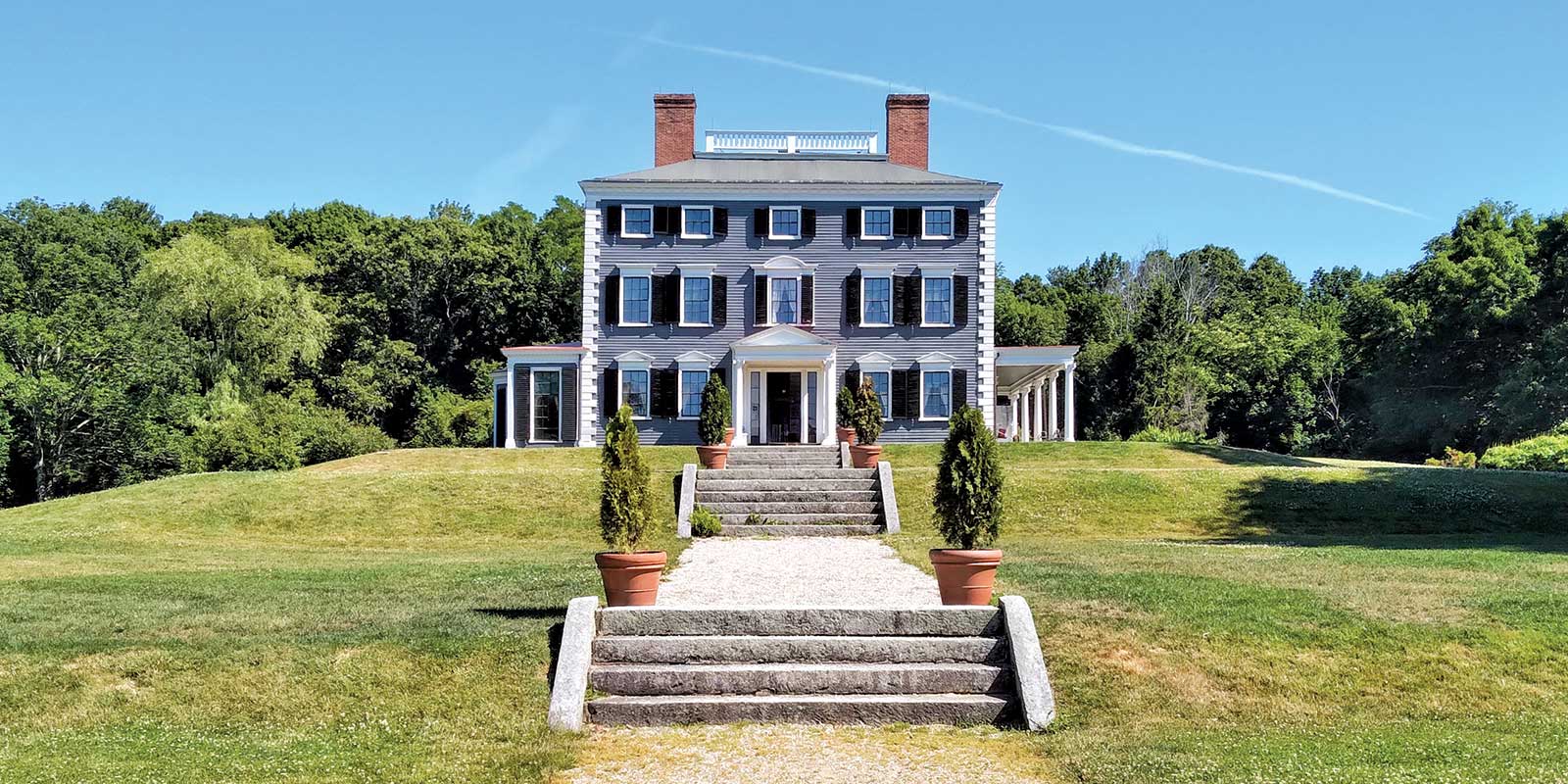
In Lincoln, Massachusetts, the Codman Estate, known as The Grange, traces its origins to the 1740s. Visitors today can explore both the historic house and grounds that reflect centuries of careful stewardship and changing tastes. By 1798, John Codman had begun transforming the landscape, separating the estate’s ornamental gardens from its working farmland and installing a distinctive “ha-ha” wall — a sunken fence designed to preserve views while keeping livestock out of formal areas. Shaded elm-lined avenues, winding paths and picturesque vistas complemented elegant garden parterres near the house, while orchards, pastures and vegetable gardens supported daily life on the estate.
The property evolved through periods of prosperity, decline and renewal. Portions of the estate were sold during the early nineteenth century before descendants later reclaimed and restored the property. In 1899, architect and designer Ogden Codman Jr. helped create a walled Italian garden that remains one of the estate’s signature features. Today, the layered landscape offers visitors a unique opportunity to see how American gardens and country estates evolved from the colonial era through the Gilded Age.
The story of America’s early prosperity comes into focus at the Rundlet-May House in Portsmouth, New Hampshire. Constructed in 1807, the grand Federal-style mansion represents a nation beginning to flourish after securing its independence.
Built by merchant James Rundlet, the impressive residence reflects the optimism and ambition of the early republic. Many of the home’s original furnishings and decorative elements remain intact, allowing visitors to experience a remarkably complete picture of upper-class life in the early nineteenth century. The house offers a fascinating look at how Americans embraced new ideas, technologies and styles as the nation entered a period of growth and confidence.
While New England played a central role in the nation’s founding, important chapters of America’s early story unfolded farther south. One of the most distinctive destinations is Historic Bath, North Carolina.
Founded in 1705, Bath was North Carolina’s first town and first port. Long before the United States existed, ships traveled through its waterways carrying goods and people throughout the colonies and beyond. The town is perhaps best known for its association with the pirate Blackbeard, who briefly called Bath home, but its significance extends far beyond maritime legend.
Today visitors can explore preserved eighteenth-century buildings, including the Palmer-Marsh House, while walking streets that have changed little over the centuries. The town’s quiet setting along the Pamlico River offers a rare opportunity to experience the atmosphere of a colonial settlement that helped shape the development of the American South.
Virginia’s Oatlands Historic House & Gardens provides another window into the years immediately following independence. Completed in 1798, the Federal-style mansion was built at a time when the United States was still defining itself as a nation.
Set amid rolling countryside, the estate reflects both the aspirations and contradictions of the early republic. The elegant architecture and formal gardens showcase the wealth and refinement sought by prominent Virginia families, while modern interpretation helps visitors understand the lives of the enslaved men, women and children whose labor sustained the property. Together, these stories create a fuller picture of America during its earliest decades.
Few places transport visitors to colonial America as completely as Drayton Hall near Charleston, South Carolina. Built during the 1730s and early 1740s, the estate ranks among the finest surviving examples of Georgian architecture in the United States.
Unlike many historic homes that have been extensively restored, Drayton Hall has been preserved rather than recreated. Visitors encounter original craftsmanship and architectural details that have survived for nearly three centuries. The property’s enduring authenticity offers an extraordinary connection to the colonial world that existed decades before the signing of the Declaration of Independence.
The journey’s westernmost stop takes visitors to Nashville. Built in 1802, Two Rivers Mansion reflects the growth of the young republic beyond the original colonies.
Constructed at a time when Tennessee was emerging as an important frontier state, the Federal-style home demonstrates how architectural trends and cultural influences traveled west with settlers seeking new opportunities. Surrounded today by parkland and historic grounds, the mansion stands as a reminder that America’s story did not stop at the Atlantic coast. It continued to unfold as communities pushed inland, establishing new towns and shaping the future of the nation.
As America commemorates its 250th anniversary, these historic places offer something that textbooks and documentaries cannot. They allow visitors to stand where history happened.
Whether overlooking Narragansett Bay at Casey Farm, walking the colonial streets of Bath or touring the halls of Two Rivers Mansion, travelers encounter tangible connections to the people who lived through America’s earliest chapters. Together, these preserved landmarks tell a story not only of a nation’s founding but also of the generations who built, sustained and transformed it.