
Lessons in the Saddle
Texas Equine Education & Horsemanship blends therapy, teaching
By Whitney Alswede
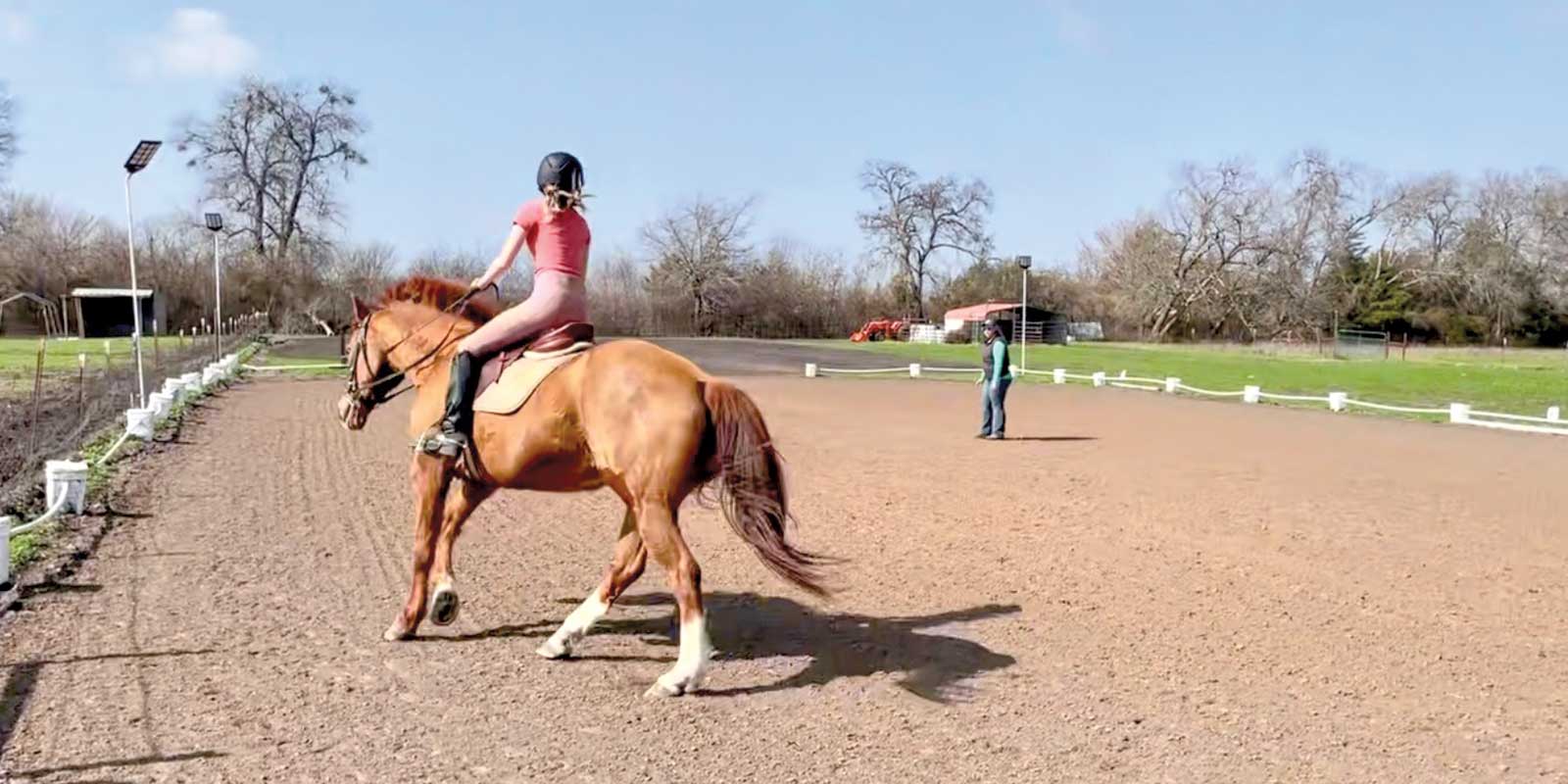
Four days a week, preschoolers, retirees, first responders, children with learning differences and a host of others make the drive to Farmersville to take a break, saddle up and breathe. By their side as they place their feet in the stirrups is Texas Equine Education & Horsemanship founder, director and lead instructor Shelby Williams.
Since 2020, the program and its 11 horses and ponies have called 20 acres of pasture along FM 903 home. What started as Shelby teaching a friend’s acquaintance’s daughter how to ride a horse has grown into a program that taps into her lifelong love of horses and passion for helping others. She built the three-arena, six-stall facility largely by hand, creating a place where students in every stage of life can hone their horseback riding skills, discover growth in mistakes, become physically stronger and learn things about themselves they’ll carry far beyond the stables.
Shelby, a PATH International-certified therapeutic riding instructor, works with each of her students to determine their goals, overcome their fears and face challenges. She says the horses’ honesty and natural tendencies make them great tools.
“The horses are so big, they’re so powerful, and they’re so sensitive,” she said.
“They’re so in tune with how everyone feels around them—a horse can pick up on emotions. It’s a really great tool to use to explain to people, ‘If you’re rough, if you’re feeling angry, that affects other people—it affects other beings around you.’ The horses are so black and white about it.”
The horses also naturally rock when being ridden, activating students’ vestibular system and calming them so they can process information. “Rocking triggers your brain to digest information, rather than just sitting still,” she said. “That’s why a lot of students with learning differences want to move, why they want to sit on a yoga ball and move back and forth.”
For her older students, whom she and her staff have dubbed “vintage riders,” working with the horses looks more like physical therapy and is a way to stay sharp.
“What we’re doing with the horse connects your brain and your body,” Shelby said. “It can affect your cognitive ability to remember multiple things, which is, in turn, going to help keep you mentally sound. And then physically, it’s keeping you active, it’s keeping you in shape so you’re less likely to get injured as you get older.”
It’s that physical therapy aspect that often draws first responders and veterans to Texas Equine through her nonprofit program, Stars & Stirrups, which gives them discounted lessons as a thank-you for their service.
“Over the years and talking to different people, some people don’t want to do therapy—they don’t think that they need it,” Shelby said. “They want to help other people, but they don’t feel that they are the ones that need help.”
Instead, she meets service members where they are and helps them get to where they want to be.
“I worked with a former police officer and firefighter who had dealt with some neuropathy a few years ago,” Shelby said. “By the time he started riding with me, he could walk but had trouble bending to put on socks and shoes. Because of the exercises that we started doing, he was able to put his shoes on by himself and get up and just start moving around. His body awareness and the connection from his brain to his body improved significantly.”
In addition to traditional horseback riding and Stars & Stirrups, Shelby and Texas Equine offer Tiny Tot Lessons, 30-minute classes for children ages 2 to 7; Equine Care Classes, teaching the basics of horse care; Connection Corral, private classes for new horse owners; online horse shows; Tel-A-Horse, 30- and 60-minute Q&A sessions; virtual education classes; and The Reading Rein, a free children’s literacy program that rewards children for reading books about horses and even donkeys and unicorns. In January, Texas Equine will launch Bridle ’N Balance, a program serving people with disabilities, as well as a book series called “Texas Equine Adventures,” written by Shelby’s mother, Kim Williams, geared toward students in elementary school.
Shelby is also giving the next generation of equestrians hands-on, real-world experience at Texas Equine through an industry-readiness internship program. College and high school students as young as 16 can apply for the eight-week opportunity and work alongside her and Kim, learning the basics of caring for the horses and gaining hands-on experience that will give them an advantage in their future careers. Interns also receive an hour of riding lessons each week and access to Texas Equine’s virtual classes.
Shelby and Kim recently had a full-circle moment at an event in Greenville when they ran into their first intern and the trainer who hired her after her internship at Texas Equine.
“She had never ridden English before in her life,” Shelby said. “When she left our program, she got a job with a trainer, and she is still working with them. They adore her. They think she’s so great—she knows how to do all this stuff.”
The latest group of interns is pursuing veterinary medicine, horse reproduction and adaptive (therapeutic) riding. In fact, the adaptive riding intern will help with the Bridle ’N Balance classes in 2026, allowing her to gain the kind of skills, confidence, and growth you can only learn in the arena.
“She’ll be one of our Industry Readiness Coaches,” Shelby said. “She’ll have volunteers and be able to service students with special needs—she’ll actually help with those classes. We’ll have instructional time for her so she learns how to build a lesson plan and assign horses and manage her volunteers—that’s what I’ve been doing for 10 years. She’s going to be learning on the adaptive riding side, versus the other three interns who want to know more about equine management and caring for horses and being able to handle them more efficiently.”
Students from Texas A&M University-Commerce’s equine industry class are regulars at the Texas Equine facility, but people across the country are taking notice of the opportunity available.
“We’ve designed the education segment to have a greater impact beyond the community here,” Kim said. “We are able to reach the entire nation, but certainly statewide. One of our interns last semester came from Pennsylvania, another from a Texas university several hours away. She relocated here to do the internship after she graduated.”
As Shelby looks forward and plans her next steps for Texas Equine, she said she wants its growth to be organic and for her programs to help others.
“We want to grow through community involvement,” she said. “We want to see how we can be involved with as many people as possible because that is what’s going to bring people to us, not just pushing it at them. I’m not a salesperson—I’m a helper. I want to help everybody, and I get joy out of sharing the horses with other people. The extra highlight is that we get to make people’s lives better—it’s just huge that we get to have that impact on other people.”
Learn more at texaseeh.com